Metrocard Wireless Charger
A 3D printed wireless phone charger for standard size cards
March 2019
I used to have a phone with wireless charging enabled.
Components
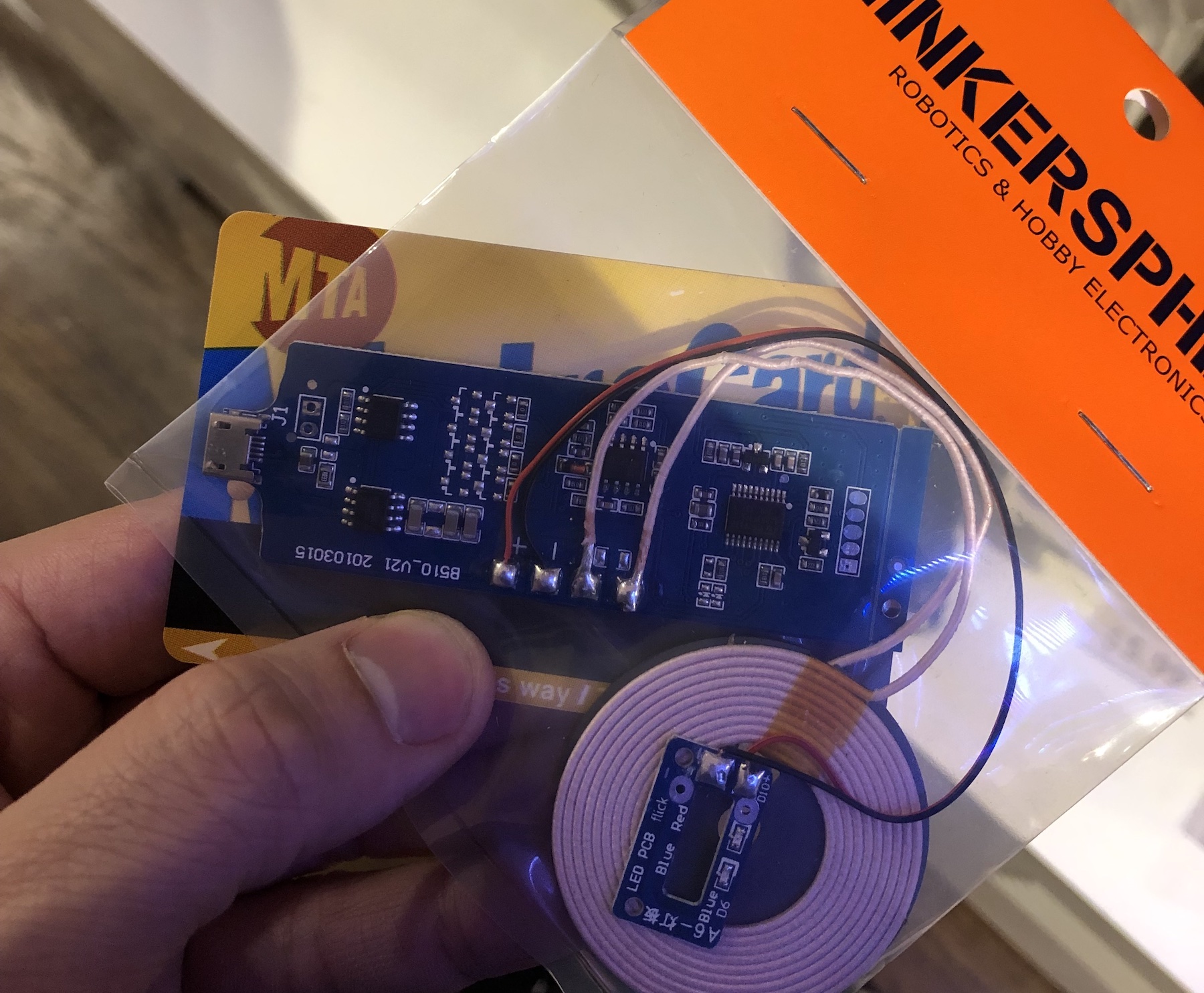
I went to a very exciting store near me called Tinkersphere and found they had the parts for a wireless charger. The circuit board and coil together were about the width and length of a MetroCard, so I bought the parts and went home to construct a wooden prototype.
Prototype
Using scrap wood, and exacto knige, and hot glue, I pieced together a working version of the charger.
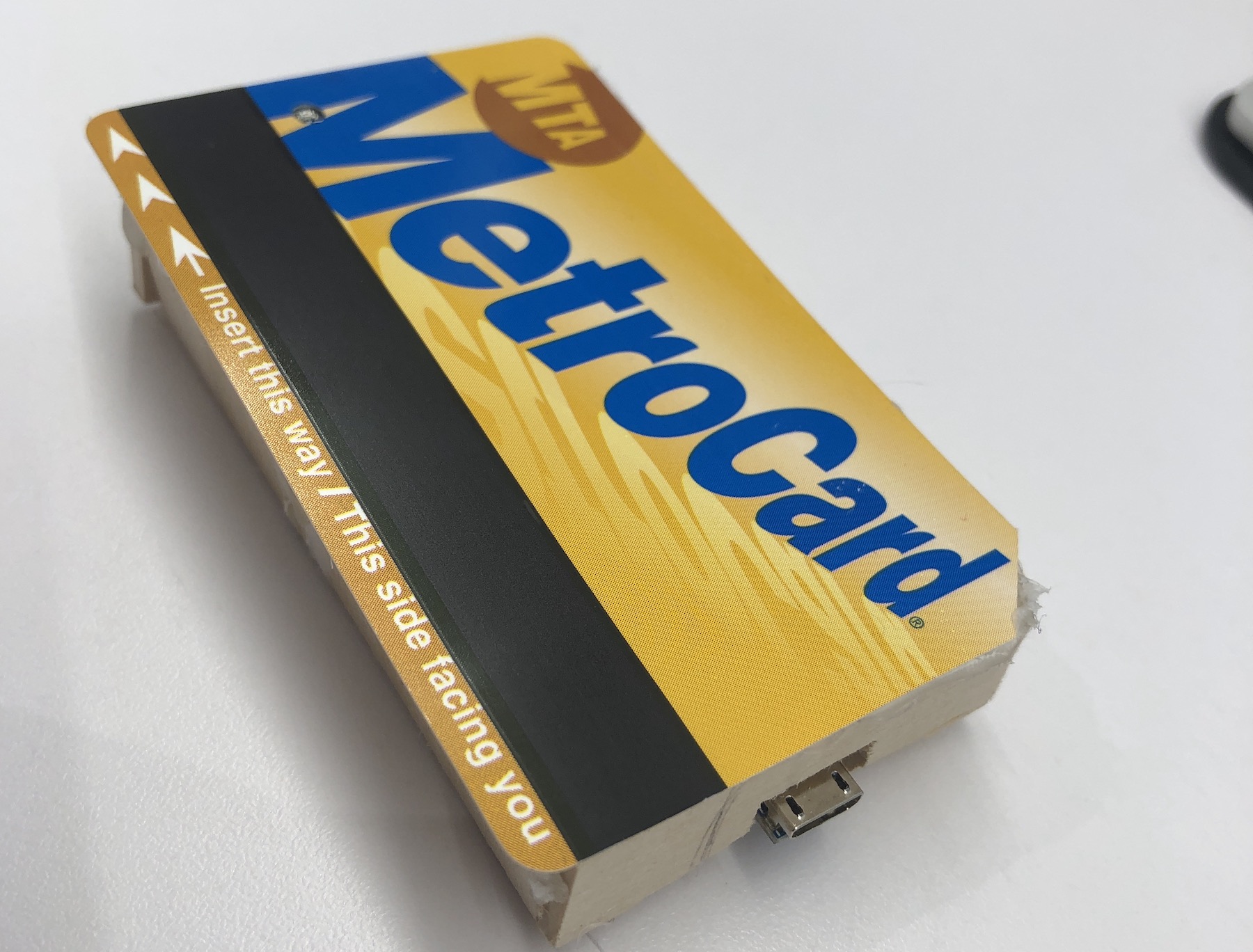
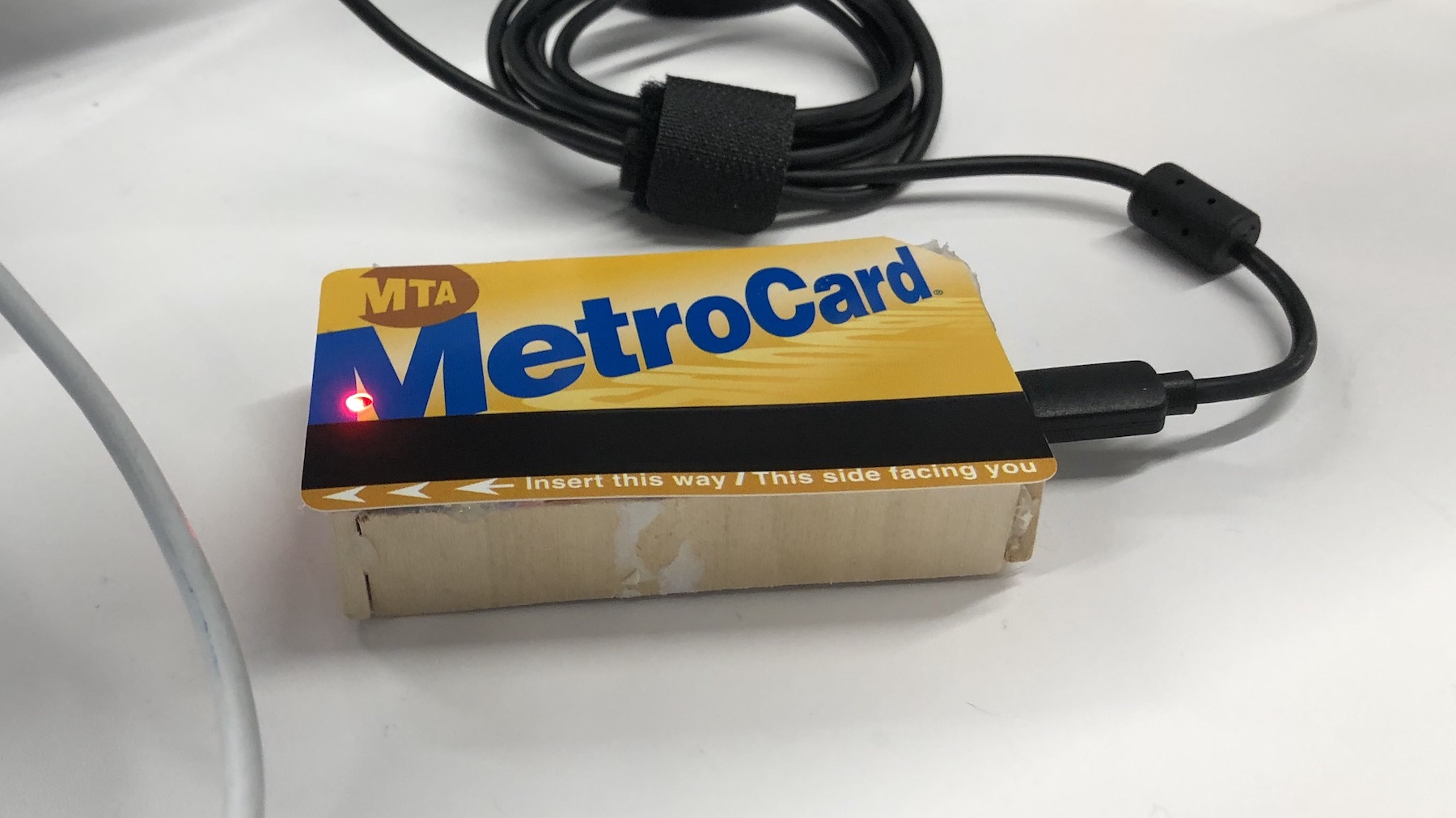
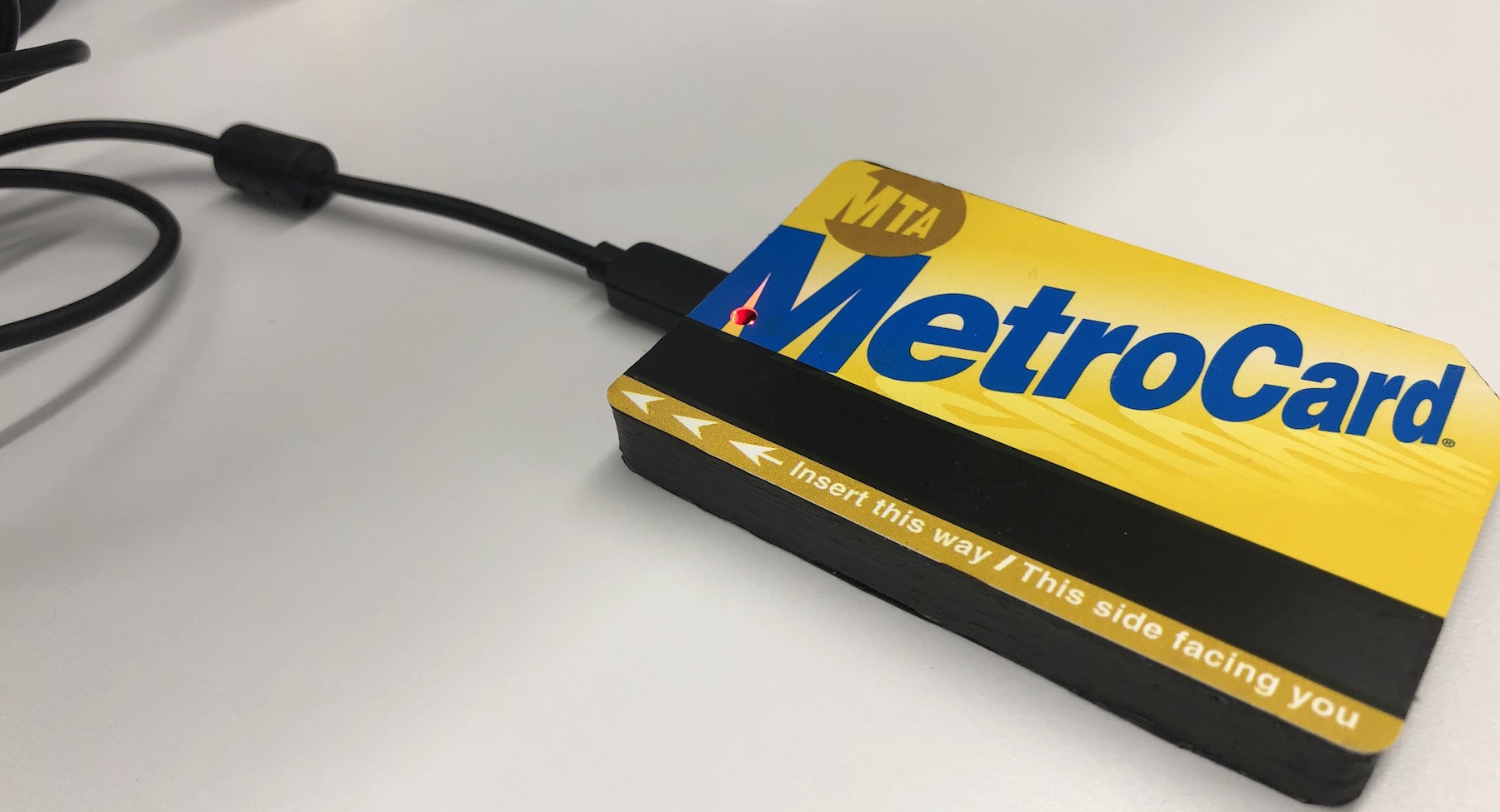
I also made sure to glue the indicator light close to the hole in the MetroCard.
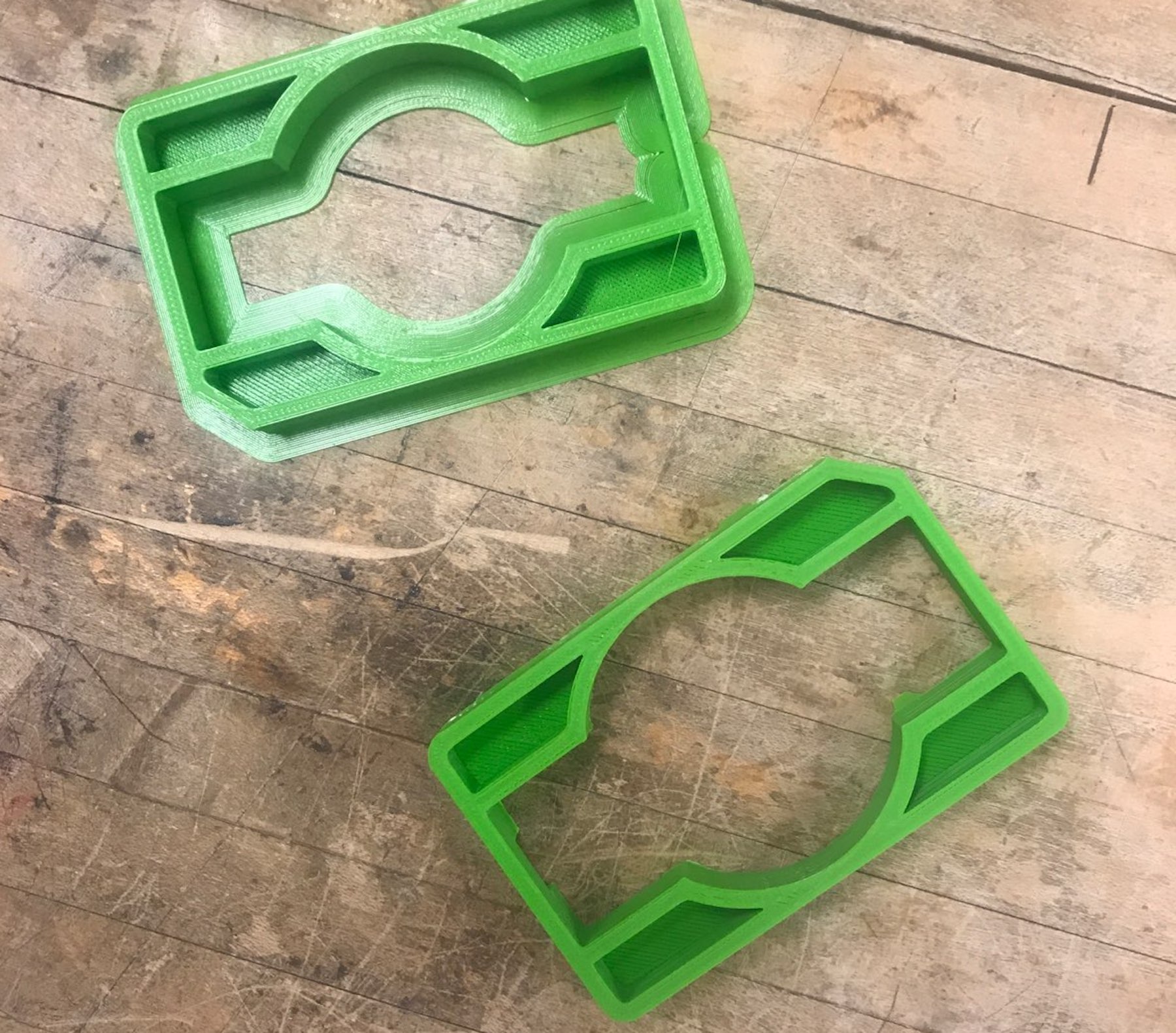
Using OnShape I created a model of the phone charger casing.
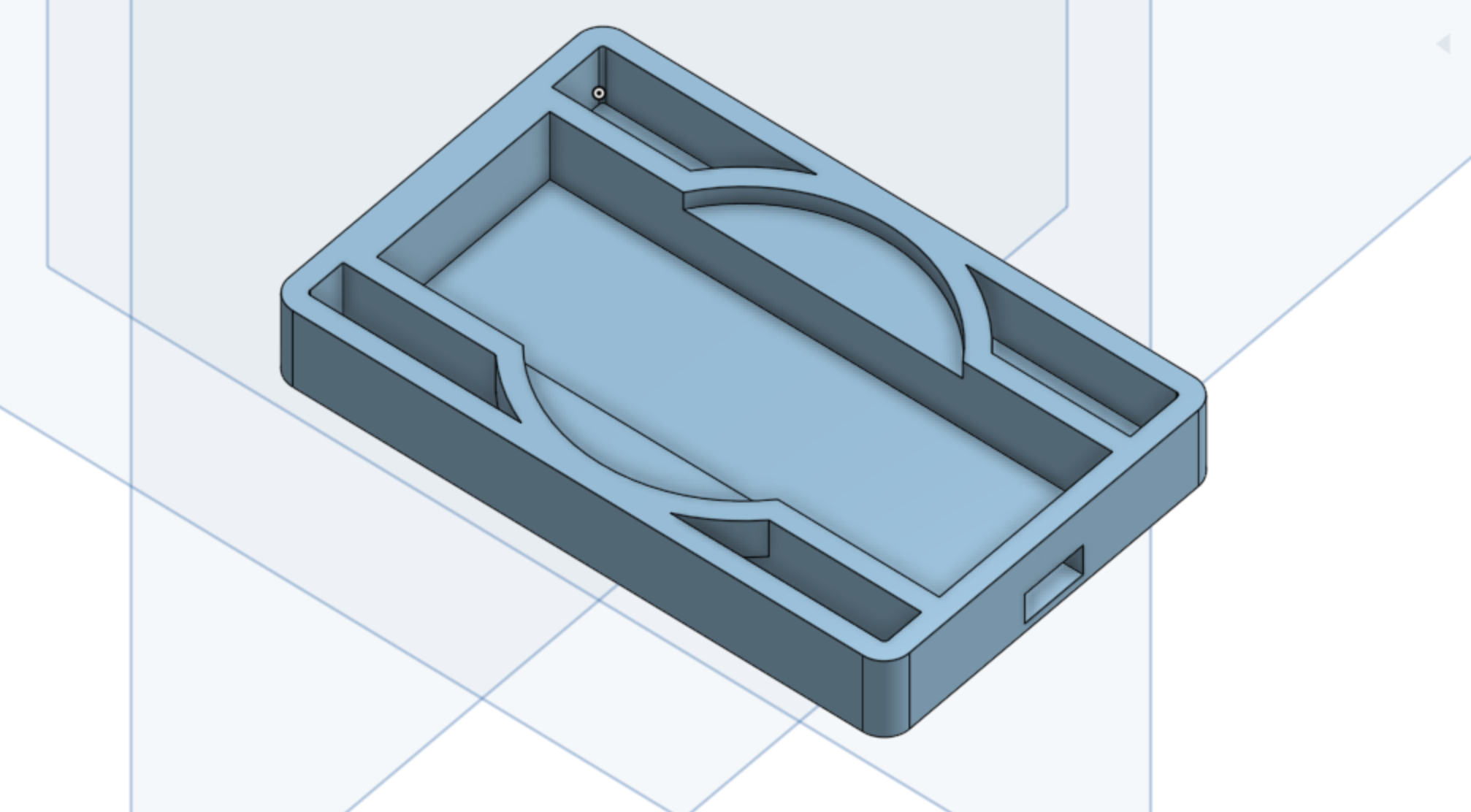
And I sent them off to a friend who has access to a 3D printer.
Final Build
After some glue and paint, the wireless charger came together.
Thoughts
What worked
The final build worked. It charged phones. The indicator light lined up with the hole in the MetroCard pretty well. The 3D printed casing was clean enough that it didn’t look like a prototype — it looked like a thing that could exist in a store.
Painting the casing black to match the MetroCard stripe was a nice finishing touch. The green in the filament would have been unacceptable.
What Didn’t
The wireless charging coil positioning was finicky. Wireless charging in 2019 had a fairly narrow sweet spot, so the phone had to be placed fairly precisely on the charger to actually charge. The MetroCard being smaller than the phone meant the phone was always somewhat precariously balancing on the charger.
The other issue was that I eventually got a new phone without wireless charging, which ended the useful life of the charger pretty abruptly.
Working with OnShape
This was one of my first real projects with OnShape, which is a browser-based CAD tool. I had familiarity with AutoCAD but the learning curve was still steep.
Version 2
The public link in the header goes directly to a new version of the model, which anyone can view or copy. This new version features:
- A platform within the circular housing to elevate the coil
- A bottom (in the original the bottom is a second MetroCard)
- No notch on the corner, in order to fit standard cards